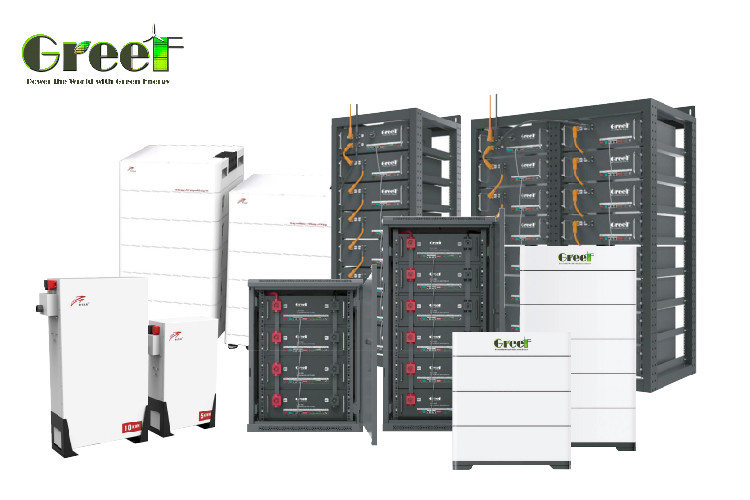
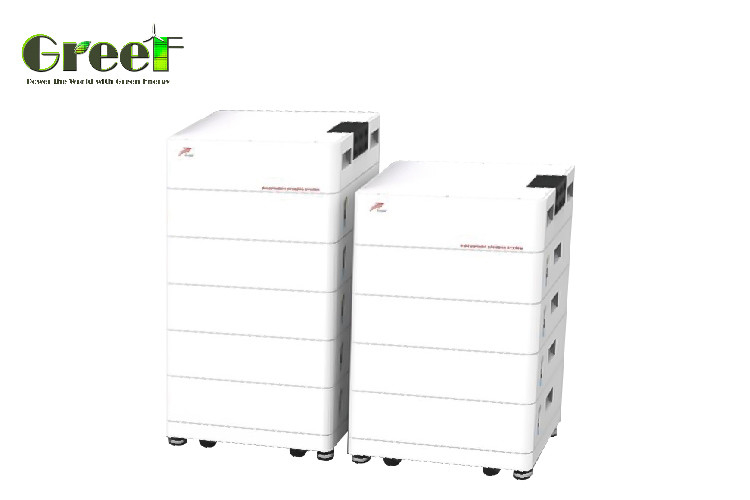
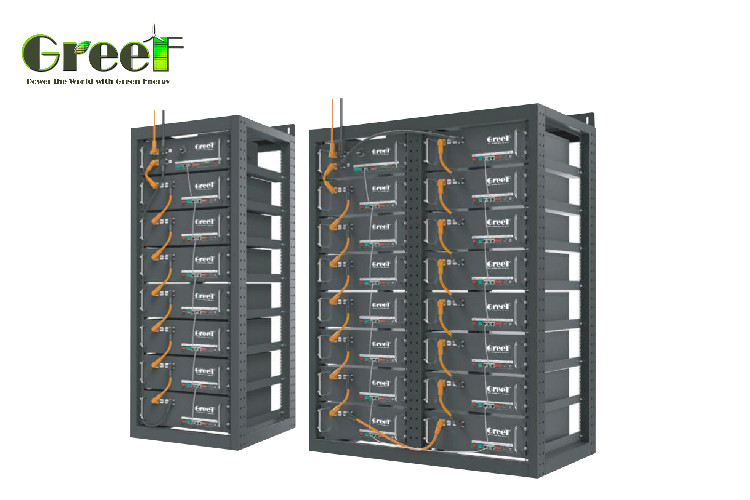
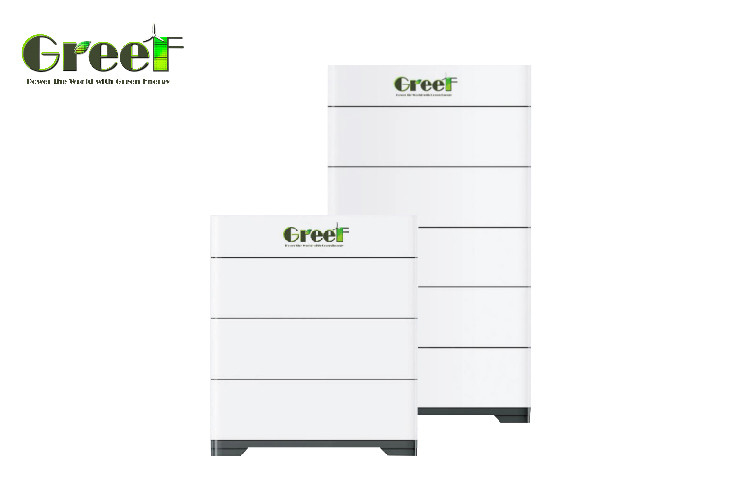
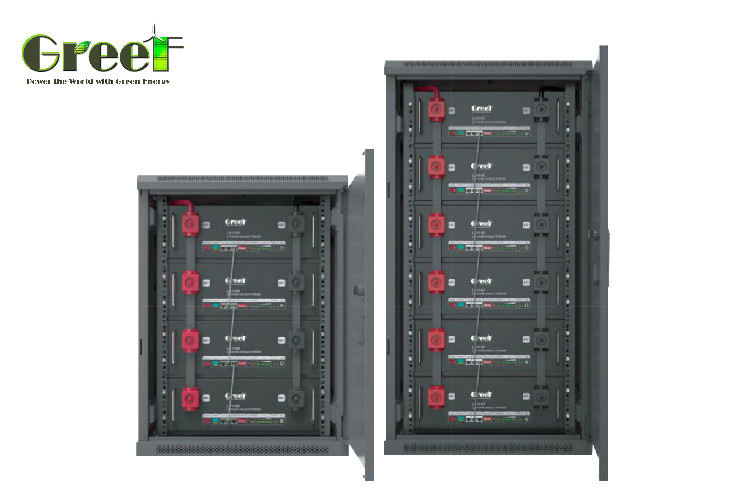
Bluetooth-Modul.Heizteile ((200W),Verteilfach (für die parallele Verbindung)
Modell
HV RESS- 72
Batteriemodule
51.2V 72Ah ((3,68KWH)
Anzahl der Batteriemodule
4
5
6
7
8
Gesamtenergie [kWh]
14.7
18.4
22.0
25.7
29.4
Nennspannung [Vdc]
204.8
256
307.2
358.4
409.6
Spannungsbereich [Vdc]
160 bis 240
200 bis 300
240 bis 360
280 bis 420
320 bis 480
Max. Ladestrom [A]
50
Max. Entladungstrom [A]
50
Impulsauslassstrom
100A/10s
Maximaler Wechselrichterleistung[W]
10000
12800
15360
17920
20480
Betriebstemperaturbereich
Ladung: 0 ~ + 55 °C; Entladung: -20 ~ + 55 °C
Operation Luftfeuchtigkeit
Modell
HV RESS- 100
Batteriemodule
51.2V 100Ah ((5,12KWH)
Anzahl der Batteriemodule
4
5
6
7
8
Gesamtenergie [kWh]
20.5
25.6
30.7
35.8
40.9
Nennspannung [Vdc]
204.8
256
307.2
358.4
409.6
Spannungsbereich [Vdc]
160 bis 240
200 bis 300
240 bis 360
280 bis 420
320 bis 480
Max. Ladestrom [A]
50
Max. Entladungstrom [A]
50
Impulsauslassstrom
100A/10s
Maximaler Wechselrichterleistung[W]
10000
12800
15360
17920
20480
Betriebstemperaturbereich
Ladung: 0 ~ + 55 °C; Entladung: -20 ~ + 55 °C
Operation Luftfeuchtigkeit
0~95% RH ((Keine Kondensation)
Kommunikationsschnittstelle
Kann*1, DI*1, DO*2
Vorteile von Lithiumbatterien
1. hohe Energiedichte: Die hohe Energiedichte von Lithiumbatterien kann mehr Leistung liefern und es neuen Energieanlagen ermöglichen, effizienter zu arbeiten.Die lange Lebensdauer von Lithiumbatterien verringert die Häufigkeit des Batteriewechsels3. Gute Sicherheit: Im Vergleich zu anderen Batterietypen haben Lithiumbatterien eine bessere Sicherheitsleistung, wodurch Brände und andere Unfälle wirksam verhindert werden können.Schnelle Reaktionszeit: Lithiumbatterien haben eine schnelle Reaktionszeit und können schnell die benötigte elektrische Energie liefern, so dass neue Energieanlagen schneller starten und anhalten können.Lithiumbatterien sind eine umweltfreundliche Art von Batterien, die die Umwelt nicht verschmutzt.
Warum Sie uns wählen
Bewertungen & Rezensionen
Gesamtbewertung
5.0
Basierend auf 50 Bewertungen für diesen Lieferanten
Rating-Schnappschuss
Nachstehend wird die Verteilung aller Ratings dargestellt.
My farm is 30 kilometers from town, and connecting to the power grid would cost a fortune. Three years ago, I installed a solar panel system with a battery bank. It was sufficient during spring, summer, and fall, but in winter, we often had a week of consecutive overcast days—and the batteries would run out in just three days. Last year, I decided to add a variable-pitch wind turbine, connected it to the AC coupling port of the Deye inverter, and set up a hybrid solar-wind system. Throughout the entire winter, the battery level never dropped below 45%, and I never had to work in the dark again. The Deye app allows me to monitor both the solar and wind turbine data simultaneously, and the transition between them is so smooth it’s almost imperceptible.
Relying solely on solar power during winter on a Nordic farm is a gamble. Only by combining a variable-pitch wind turbine with a Deye inverter—creating a wind-solar hybrid system—can you get through the winter with peace of mind.
Since installing this variable-pitch wind turbine, the battery hasn’t run low again. Before, I used to worry whenever we had consecutive overcast days and light winds in the winter, but now it can even charge the battery in low winds. Best of all, it doesn’t suddenly start screeching during gusts, so it doesn’t disturb my family’s sleep. The installer also mentioned that variable-pitch turbines are easier to calibrate than fixed-pitch ones. I give it five stars!
I run a small dairy farm in northern Norway, far from the power grid. A few years ago, I installed solar panels and a Deye inverter, but the solar system basically stops working in winter, and the diesel generator was costing me a fortune. This year, I added this variable-pitch wind turbine and connected it to the Deye inverter for a hybrid solar-wind system, and we haven’t had a single power outage all winter. This wind turbine starts up at low wind speeds of just 2–3 on the Beaufort scale. During blizzards, the blades automatically pitch down to slow the turbine, preventing runaway speeds, and it’s much quieter than my neighbor’s fixed-pitch model. The Deye inverter’s switching logic is smart—it prioritizes solar power when available, and automatically switches to the wind turbine when solar output drops. It’s all clearly visible on the app. Now, the diesel generator is practically idle. Wind and solar backing each other up—that’s true off-grid freedom.
Gesamtbewertung
Rating-Schnappschuss
Nachstehend wird die Verteilung aller Ratings dargestellt.Alle Bewertungen